Saturday, February 4, 2012

entry 4

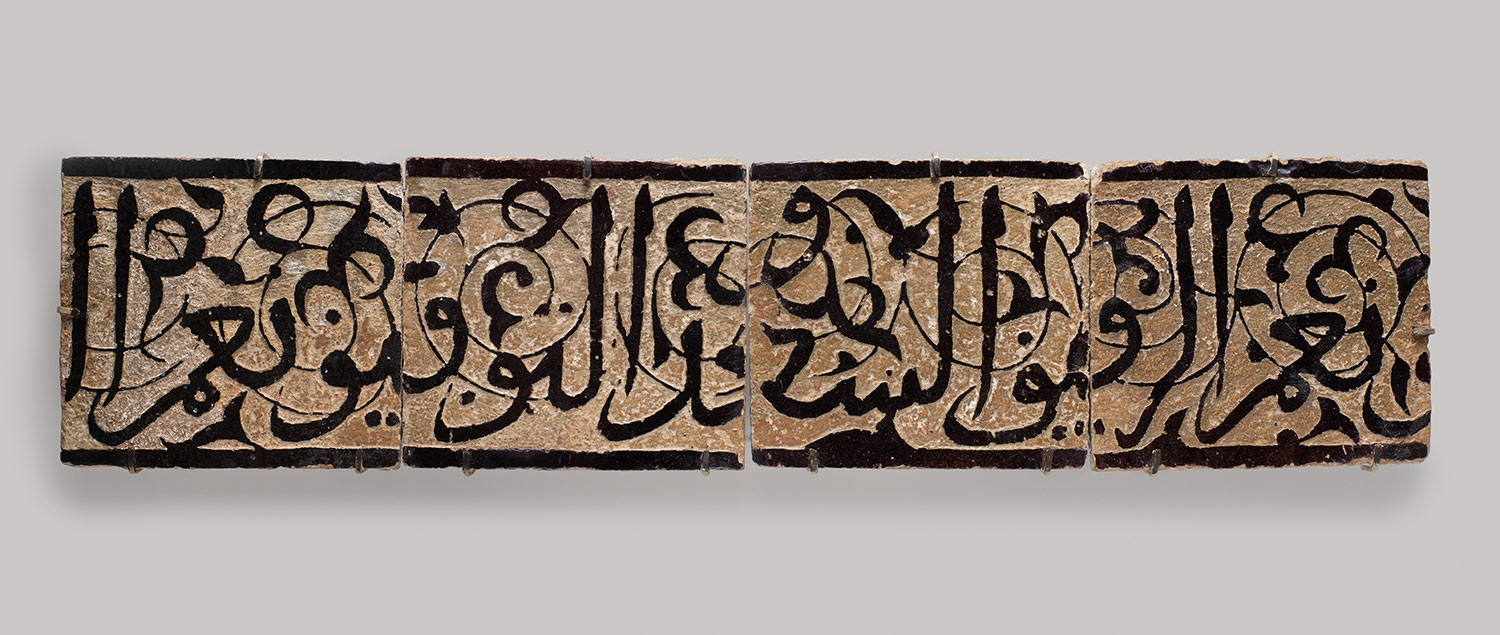
This is an Panel of four calligraphic tiles. Made in the 14th–early 15th century; Marinid
Morocco this panel has a lot of life in it its creative and it says something. the hand writing is delicate and careful i also like the simple colors i would put this up in my house.
"Panel of four calligraphic tiles [Morocco] (1999.146)". In Heilbrunn Timeline of Art History. New York: The Metropolitan Museum of Art, 2000–. http://www.metmuseum.org/toah/works-of-art/1999.146 (October 2006)


I really like this bowl made in late Middle Jomon Period (ca. 2500-1500 B.C.), Ca. 1500 B.C. i like this one because it is deep and it's not just strait it is curvy with what i think is awesome side handles.

"Deep bowl with sculptural rim [Japan] (1992.252.1)". In Heilbrunn Timeline
of Art History. New York: The Metropolitan Museum of Art, 2000–.
http://www.metmuseum.org/toah/works-of-art/1992.252.1 (October 2006)


What i like the most about this blue Cup is that it is wide and has a thin small foot. i also enjoy the two handles. it was made in Greek, Athens, late 6th Century BC.

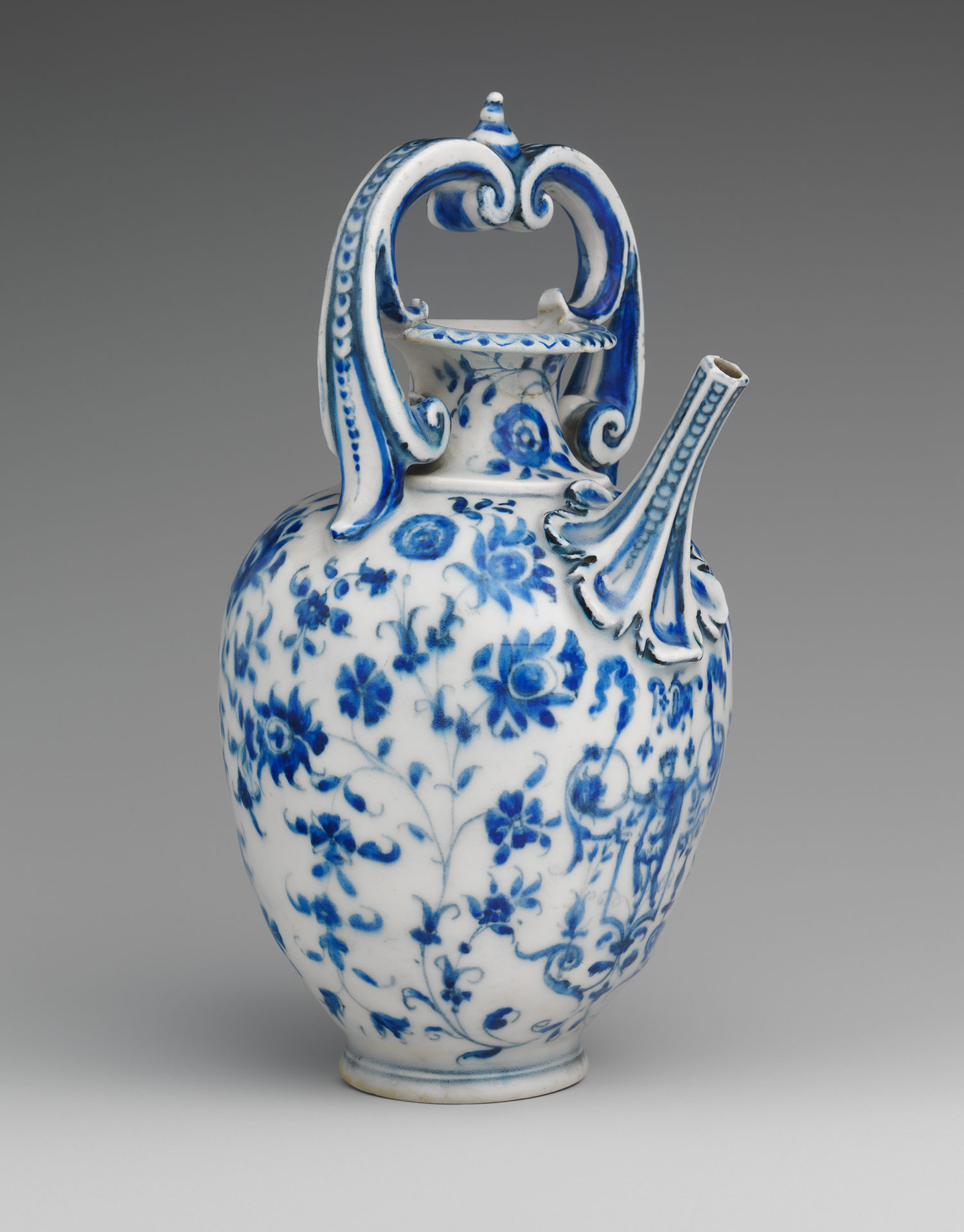
Out of all the pictures i looked at this one was my favorite i like the face on it and the way it sorta tells a story i also like the fact that it has a lot of colors and that there may or may not have a lid. this is a Pharmacy Jar, made in the late 15th centuryItalian (Naples). this piece of art has the most unique qualities to it.


"Pharmacy Jar [Italian (Naples)] (46.85.15)". In Heilbrunn Timeline of Art History. New York: The Metropolitan Museum of Art, 2000–. http://www.metmuseum.org/toah/works-of-art/46.85.15 (October 2006)


Thursday, February 2, 2012

Samantha Simonson Post #4

I really like this piece because it has the Greek look. I also think that this cup has more characteristics of a bowl. I also think that the rough edge and the colors make it look more like an ancient antique. 


I really like the design of this piece but I am not quite sure as to what it is used for. I think it is the two holes in the center is what is throwing me off. I also really like the color that are used it reminds me of cave man drawings. 


What caught my attention on this piece was the legs at the bottom. Another thing that I really like is the tribal art work around it. Plus the colors add to the effect that it is something tribal. 


What I really like about this bowl is the simplicity of this. I really like the painted lines around the edge. I like that there some lines that are thicker and some are really thin, and there is some loops and spots that also make the it look simple. 

Monday, January 30, 2012

Entry #4


This piece is from the northern song chinese dynasty. I love how simple and delicate it looks. It looks like something that would be used during special ceremonies. The designs on it are small and simple but they compliment the feet on this and go perfectly with the overall look! It almost looks like ther is a person dancing in between the flowers or like the flowers and the shape in the middle are blowing in the wind.


These pieces are Teotihuaca pottery. At first glance it looks like the design on the pots are random and done for creative purposes but after looking closely you can see that they were put there to tell a story. I love that these pieces make you look closer and captivate you making you wonder what story they're supposed to be telling.


This piece from the Silla Dynasty has got to be one of my favoites. The colors on the top and bottom really compliment eachothe, yet the sam design is used throughout making it all fit together. The handle and the overall shape of it remind me of the outdoors, like walking through a medow or someplace equally relaxing.


Sunday, January 29, 2012

Journal Assignment 4 Jessica Lowry

This piece is a Greek Kylix cup. I chose this piece because to me it does not look like a cup at all but instead a bowl. The handles on both sides makes me wonder what one would be drinking out of this cup and if it was used in ceremonies?

http://www.metmuseum.org/toah/works-of-art/60.20.15


This piece was found in Hasanlu cemetery in Northwest, Iran. I chose this piece because it looks like a tea pot almost sitting on some kind of old style burner. To me it looks like a flame would be put under the pot to heat up the contents inside. I enjoy this piece because it is very different from the other pieces that I looked at.

http://www.metmuseum.org/toah/works-of-art/60.20.15


I chose this piece because it is from Teotihuacan, Mexico. I use to be an Anthropology major and my focus was on Mesoamerican culture so pieces like this fascinate me. I really like the intricate design around the bowl, as well as the peg-like feet.

http://www.metmuseum.org/toah/works-of-art/1979.206.364

Assignment 4

This ceramic work is a great example of how text can be used for both a narrative and decoration. It reminds me of Islamic art since it has no imagery work that can cause a distraction for viewers. I think that the overlapping of text and circles work well together since it creates depth and movement.  And the top and button border help viewers focus on the center.
"Panel of four calligraphic tiles [Morocco] (1999.146)". In Heilbrunn Timeline of Art History. New York: The Metropolitan Museum of Art, 2000–. http://www.metmuseum.org/toah/works-of-art/1999.146 (October 2006)
The overall shape of this ceramic work is interesting; it has a strong feet for balance; the geometric shapes follow the contour of the cylinder. In addition, what I find most appealing about this work is how it has a unique style when compared with other ceramic cylinders made in the U.S.
"Bottle [Caddoan peoples; Arkansas] (1978.412.85)". In Heilbrunn Timeline of Art History. New York: The Metropolitan Museum of Art, 2000–. http://www.metmuseum.org/toah/works-of-art/1978.412.85 (October 2006)
I enjoy how the exterior surface of this work has painted symbols that might represent the once powerful city of Teotihuacan. And based on the repetition of the symbols there is no doubt that the maker was enforcing its culture.  The three small feet give the work also an aesthetic interest.
"Tripod Vessel [Mexico; Teotihuacan] (1979.206.364)". In Heilbrunn Timeline of Art History. New York: The Metropolitan Museum of Art, 2000–. http://www.metmuseum.org/toah/works-of-art/1979.206.364 (October 2006)

Wednesday, January 25, 2012

Research Journal Assignment 4


I like this bowl because, at first glance, it reminded me of a clock, but after reading the description of the design, it depicts objects and buildings throughout the history of Islamic art, and this bowl spcifically shows purity and power. It's a simple disign, but at a closer look it shows a lot of the Islamic history and culture.

"Bowl [Samarqand (Uzbekistan) or Nishapur (Iran)] (65.106.2)". In Heilbrunn
Timeline of Art History. New York: The Metropolitan Museum of Art, 2000–.
http://www.metmuseum.org/toah/works-of-art/65.106.2 (October 2006)


This piece caught my eye because of how much detail there is on the top. It doesn't look you could drink out of it, or even mix anything in it, rather it could be used just for decoration, or as it was really used in the Japanese culture, for ritual. I also found this piece really cool because of how it was made - with coils of clay and then smoothed out. I imagine that building up the clay would be much easier than getting everything smoothd out and symetrical.

"Deep bowl with sculptural rim [Japan] (1992.252.1)". In Heilbrunn Timeline
of Art History. New York: The Metropolitan Museum of Art, 2000–.
http://www.metmuseum.org/toah/works-of-art/1992.252.1 (October 2006)


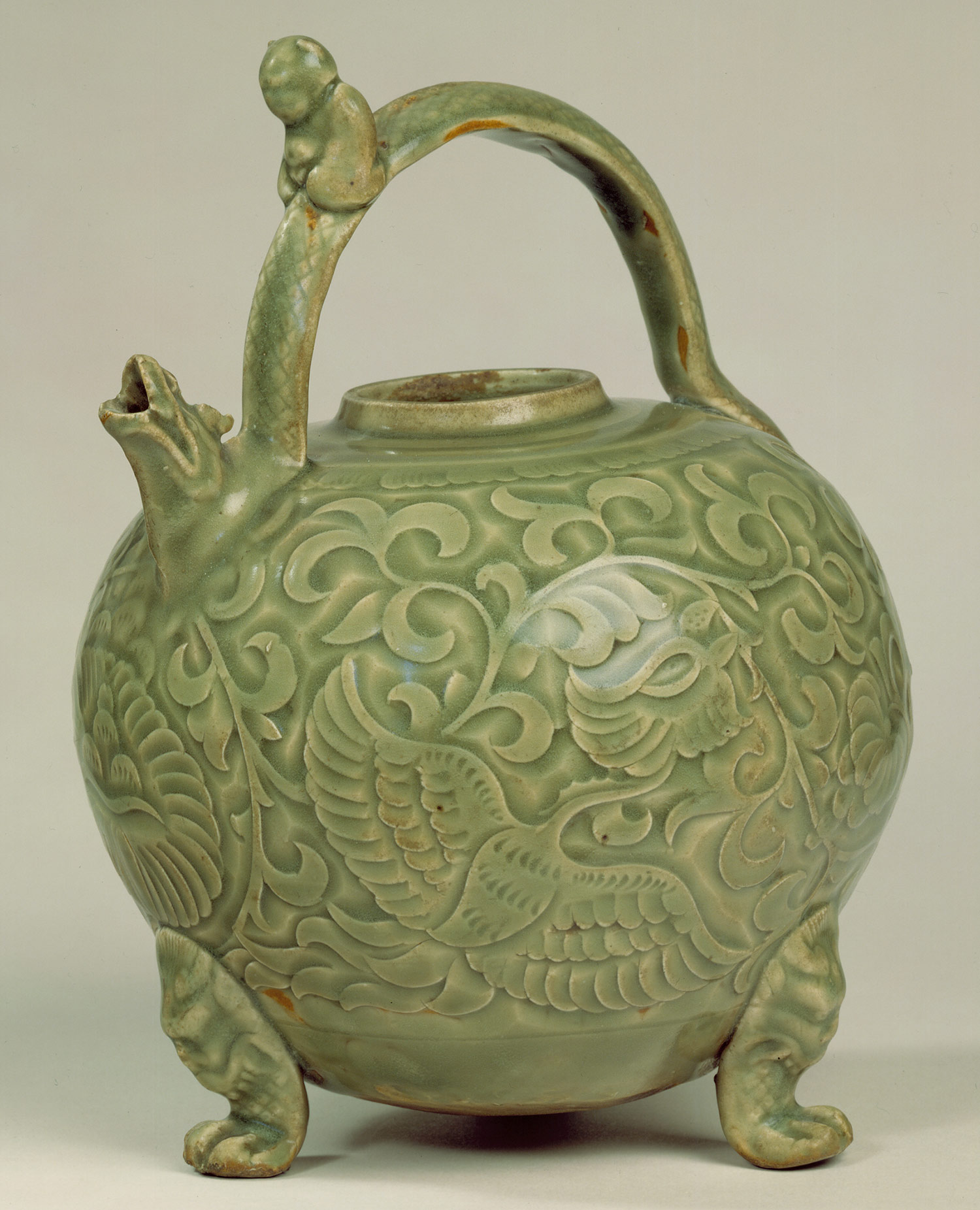
I love this piece becuase of the glaze and the detailed carved patterns. It looks as if it were painted with a light and dark green, but instead just a single glaze that pooled up where the clay had been hollowed out. The design makes it look very elegant when in reality it depicts "a serpent-leg dragon whose head forms the spout and is straddled by a dimunitive rider".

"Ewer [China] (26.292.73)". In Heilbrunn Timeline of Art History. New
York: The Metropolitan Museum of Art, 2000–.
http://www.metmuseum.org/toah/works-of-art/26.292.73 (October 2006)


This. Is. Awesome! I want one of these! The detail is amazingly done and the handle is very whimsical at first glance, but at a closer look, there are two children playing! I love the way that the children are thrown in there but made to look just like the rest of the handle. The description explains that princes and wealthy patricians collected these for display, and it makes sense - these look expensive and as if only the finest liquids should be put in them to be drank by the most wealthy people.

http://collection.mam.org/details.php?id=4287

Research Assignment 4


Upon first glance of these tiles I thought that they were just a design. The written words are delicately flowing with the fancy swirling background that they appear together as one. This could be, however, because I am not by any means a master of languages.
The spout of this ewer is my favorite aspect because it looks like a flower that is resting on its side. This would coincide with the floral print that decorates the main body of the ewer. I like how the ewer also incorporates designs from multiple cultures, this perhaps makes it more unique because the creator, even in that time period, admired other culture's styles enough to add them to their work.

The detail of the vessel is amazing. There are so many small things happening, paw/foot legs that elevate the piece, a dragon with a rider that serves as a handle and the over all intricate pattern with a glaze that darkens as it reaches the design. All of these details are prominent, yet subtle enough not to overwhelm the viewer.

Journal 4

 I love the paint job on this porcelain piece by Ewer. I love the colors and just the fact that it is porcelain. I also like the shapes on the handle and spout, it is very elegant and pretty.

http://www.metmuseum.org/toah/works-of-art/17.190.2045


 I chose this piece from Peru because it is just weird. I'm not really sure what this vessel would be used for but I would think mostly just decoration because it doesn't seem too practical. I do like the designs and how well the colors go together, also how clean the paintings are.

http://www.metmuseum.org/toah/works-of-art/64.228.21
 I love this bowl from Uzbekistan because of the simplicity of it. The colors are super basic and classic. The decorations are interesting and seem like they probably have a meaning or say something, but to me, they are just interesting.

http://www.metmuseum.org/toah/works-of-art/65.106.2
I chose this Mexican vessel because of the feet and the designs. I don't know if the designs are carved in or painted on but they are very intricate and I think each one is different. I also like that the feet raise the vessel off the ground so much. It makes it different.

http://www.metmuseum.org/toah/works-of-art/1979.206.364

Journal 4-Steph Wood

Greek Attic pottery kylix cup
(http://www.heliosgallery.com/noframes/greek/descriptions/62.php)
Greek Kylik
I like this Greek cup because it looks very smooth and seems like it would be nice to eat from. The website says that this is a style that is actually hard to come by. The coloring looks very bold and says a lot to the person viewing it. When I see it I think of those egyptian rulers, it gives a vibe of royalty...

 
(http://collection.mam.org/details.php?id=4287)
German Tankard
When I saw this piece it gave me a familiar feeling because at home I have a lamp that looks a lot like this in the living room. It seems like a lighthouse and looks very detailed and beautiful. I would love to own this, I imagine it being a family heirloom that a grandma would bring out every once and a while for special occassions.


(http://www.metmuseum.org/toah/works-of-art/60.20.15)
Iranian
Ancient people holding magical secrets in this vessel, say holy water or the fountain of youth, is what this brings to mind for me. It's mysteriously beautiful and gives a lot for the eye to see. It also resembles a "snitch" from Harry Potter, the flying ball piece in the game Quidditch.


(http://www.metmuseum.org/toah/works-of-art/1979.206.364)
Mexico: Teotihuacan
I love the coloring and the large volume of this bowl. I just studied the Teotihuacan's this past quarter and I find this piece quite intriguing. It inspires me to do more outlining carving on my slab cylinders. Oddly this bowl makes me think of an elephant, when you look at the feet, it almost looks like elephant feet.

Monday, January 23, 2012

Assignment 3

Warren Mackenzie
I really enjoy the colors on this bowl; the dark orange and light browns remind me of the sand in the beach. It almost seems that layers of sand are what make up the shape of Mackenzie’s bowl. And the cut out shapes can represent marks left from winds or rocks. In addition, the foot of the bowl appears to be thick for balance.


Bernard Leach
I think that the black or dark green color and the light brown color work well together.  And the flat rectangle shapes around the bowl help create movement. At the same time, the feet itself help viewer’s eyes to move up.
Shoji Ha
This is an outstanding bowl! The colors used and the texture of the bowl remind of a glacier flow. The brown colors can easily represent mountains. And the white and blue colors become the focal point. The thin and small feet of the bowl are not a distraction at all. In fact, it reinforces the focal point.

Linda Chistensen
I like how the artist chose to show viewers the process of ceramics by leaving some rough edges and paint marks behind. I enjoy the earth tone colors. And the thin foot reinforces the upper shape and the interior color of the bowl.

Research Assignment 3

The shape of the lip that Linda Christensen put on this bowl is simple and is enhanced by the addition of a little bit of a white glaze on the indented parts of the lip which softens while deepening the indentations. The foot is small and simple not detracting from the attractive lip manipulation.
The visual optics of Shoji Hamada's bowl created by the glaze give the illusion of depth beyond the bowl. It's extremely beautiful. I love the way the colors flow into the center of the bowl. This bowl has a small foot which, I feel, is so that the foot does not detract from the glaze job.

Bernard Leach's bowl also has a larger foot like that of Mackenzie's; however, the glaze does not extend as far down as Mackenzie's when ends up visually separating Leach's bowl from the foot. It shortens the bowl by distinguishing the bowl from the foot and is aided by the multifaceted shape of the bowl from the smoothly curving foot.
The shape of the lip that Linda Christensen put on this bowl is simple and is enhanced by the addition of a little bit of a white glaze on the indented parts of the lip which softens while deepening the indentations. The foot is small and simple not detracting from the attractive lip manipulation.

The glaze job of Clary Illian's bowl is visually challenging the observer subtly by illustrating the depth of the bowl. The foot is, once again, smaller which doesn't distract the looker from the pattern on the bowl.